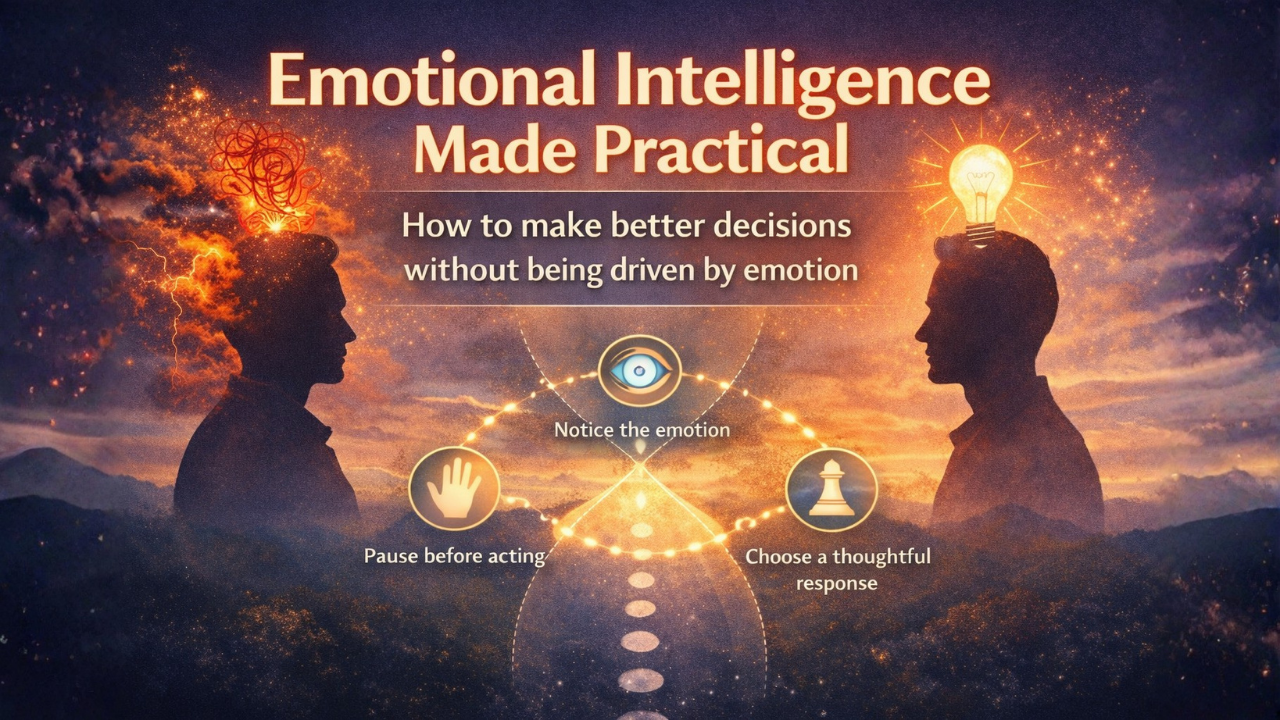
How to make better decisions without being driven by emotion
Emotional Intelligence Is Simpler Than You Think
Emotional intelligence is often talked about as if it’s mysterious, complex, or reserved for highly self-aware people. It’s not.
At its core, emotional intelligence is a very practical skill. I think of it as the ability to make calm decisions without being driven by emotion.
Most people aren’t ineffective because they lack intelligence or motivation. They’re ineffective because frustration, stress, pressure, or mood quietly takes over their decision-making. When emotion drives the bus, logic usually gets left behind.
Emotionally intelligent people don’t suppress or ignore their feelings. Instead, they notice what they’re feeling and set it aside long enough to think clearly. That small separation creates better decisions, and better outcomes.
What Emotional Intelligence Really Is (In Plain Language)
Here are three simple definitions that actually matter in everyday life:
- Emotional Intelligence is the ability to notice your emotions and stop them driving your decisions.
- Emotional Intelligence is recognising when feelings are influencing your thinking—and choosing a calmer, more useful response.
- Emotional Intelligence is creating enough space between emotion and action to respond thoughtfully instead of reacting habitually.
Notice what’s missing from these definitions. There’s nothing about being emotional, expressive, or sensitive. Emotional intelligence isn’t about feeling more. It’s about being less controlled by what you feel.
Why Emotions Can Hijack Your Decisions
Emotions are fast. Thinking is slower. In fact, your brain is wired so that emotions are felt before you can logically think about something. That creates a problem.
When you’re stressed, frustrated, anxious, or tired, your brain looks for shortcuts. It wants quick relief, certainty, or control, and that’s when poor decisions creep in.
You might:
- Snap in a conversation you later regret
- Avoid a decision because it feels uncomfortable
- Push too hard because impatience has taken over
- Say yes (or no) too quickly just to escape tension
In those moments, the issue isn’t the emotion itself. The issue is that emotion becomes the decision-maker. Emotional intelligence gives you just enough pause to say:
“Something’s coming up here. Let me think first.”
That pause is everything.
Myth vs Truth: Emotional Intelligence
MYTH: Trust your gut—your emotions always know the right answer.
TRUTH: Emotions provide information, but emotional intelligence decides when to use it and when to pause.
MYTH: Being emotionally intelligent means being guided by how you feel.
TRUTH: Emotional intelligence means noticing how you feel without letting it make the decision for you.
MYTH: Strong emotions lead to strong decisions.
TRUTH: Calm thinking leads to clearer decisions, even when emotions are strong.
Emotions are valuable. They signal what matters, what feels threatened, or what feels important. But they are poor leaders if left unchecked.
The Practical Skill Most People Miss
The most useful emotional intelligence skill isn’t empathy or awareness. It’s separation.
The ability to separate:
- Feeling from deciding
- Reaction from response
- Emotion from action
This doesn’t mean ignoring how you feel. It means saying:
“I see you but you’re not in charge right now.”
Even a short pause changes everything.
A breath.
A moment of silence.
A simple internal question: “What’s the best response here?” or “What matters most to me here?”
That space allows logic, values, and purpose to re-enter the conversation.
Emotional Intelligence in Real Life
Emotionally intelligent people still feel frustration, stress, anger, and anxiety. The difference is what they do next.
They:
- Notice the emotion instead of becoming it
- Delay action when emotions are high
- Choose responses aligned with who they want to be
- Make decisions they don’t regret later
Over time, this builds trust, credibility, and consistency—both with others and with themselves.
Calm Beats Clever
Emotional intelligence isn’t about being soft or detached. It’s about being effective.
When emotions run the show, even smart people make poor decisions. When calm thinking leads, outcomes improve, even in emotionally charged situations.
Emotional intelligence isn’t about ignoring emotions.
It’s about not being run by them.
A Simple Action Step
The next time you feel a strong emotion, don’t act immediately. Instead, ask yourself:
“What would a calm version of me do right now?”
That question alone creates the space where emotional intelligence lives.
Want to Go Deeper?
Related Resources
- 📖 Book: Listening – A Guide to Building Deeper Connections – available in paperback, eBook, and audiobook.
🎯 Coaching: Book a personal session for personalised support.
💼 Leadership Tips: Subscribe to the Team Focus newsletter here.