Who Are You Becoming?
Have you ever really thought about your identity? Most people haven’t.Yet your identity quietly shapes almost everything you do. What you attempt. What you avoid. What you believe is possible for you, and what you instinctively rule out.
Your identity isn’t something you consciously chose. It was formed early in life through a mix of influences:
things people said to you, experiences you had, successes, failures, encouragement, criticism, and moments that stuck.
And here’s the key point.
Your identity is especially shaped by the opinions of people whose approval you cared about.
Over time, all of this went into your unconscious mind and began shaping how you see yourself.
Identity Lives Below the Surface
Your identity doesn’t live in your conscious thinking. It lives beneath it. Which means the fastest way to understand your identity is not to think harder—but to listen more carefully.
Listen to the way you talk to yourself. Your inner voice is driven by your unconscious, and identity lives at that level.
For example:
- You think, “I could do that.”
And your inner voice responds, “No, you couldn’t.” - You think, “I could afford that.”
And your voice immediately shuts it down.
Those reactions are not logical.
They are identity-level neurological responses.
They reveal how you’ve seen yourself historically.
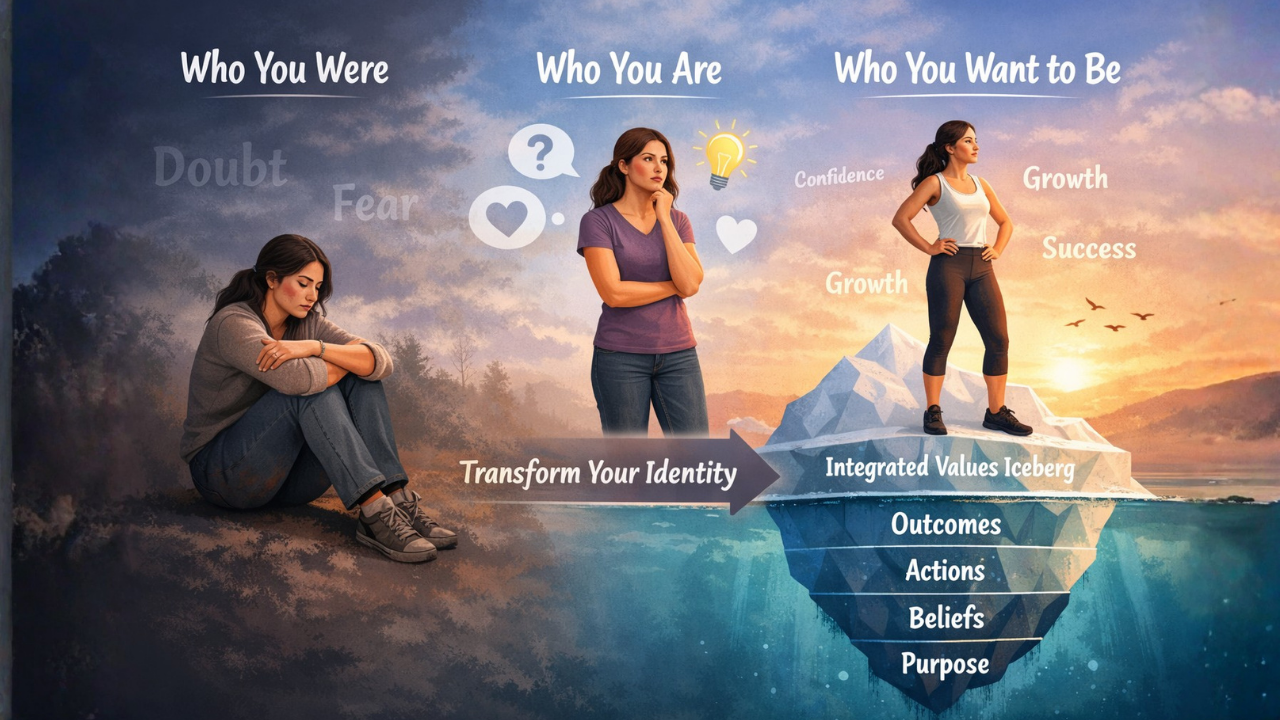
The Three Phases of Identity
A helpful way to think about identity is to break it into three phases.
Who You’ve Been
This version of you was shaped by past experiences and beliefs.
Are you confident—or hesitant?
Do you see yourself as someone who does things—or someone who talks themselves out of them?
Your inner dialogue gives you clues.
Who You Are Currently Being
Sometimes identity shifts quietly.
A new role. A new challenge. A new awareness.
You may already be changing without fully recognising it.
Who You Would Like to Become
This is where conscious choice begins.
Up until this point, identity has largely been shaped for you.
From here on, it can be shaped by you.
Designing Your Identity on Purpose
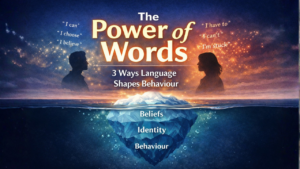
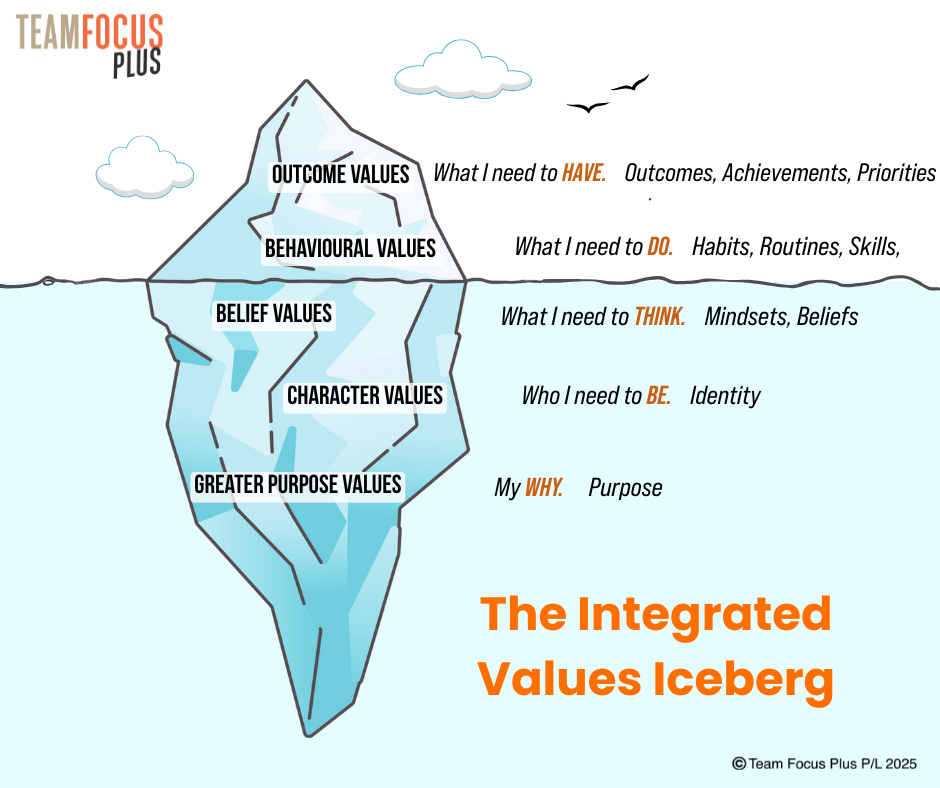
In Listening – A Guide to Building Deeper Connections, I introduced a tool called the Integrated Values Iceberg. It was designed to help people work at the level where real change happens, below the surface.
It starts with deeper questions:
- Why does this identity matter to you?
- What kind of person do you want to become?
- What character traits do you want to embody consistently?
From there, it helps you align:
- How you need to think
- How you need to behave
- What outcomes actually matter to you
When these levels are integrated, something powerful happens.
Your unconscious stops resisting change and starts supporting it.
Why Most Change Efforts Fail
Most people try to change at the surface level:
- New habits
- New goals
- New rules
But if those changes aren’t aligned with identity, they don’t stick.
That’s why motivation fades.
That’s why people self-sabotage.
That’s why good intentions don’t turn into consistent action.
Real change requires alignment from the inside out.
Becoming Who You Want to Be Isn’t as Hard as You Think
This isn’t about forcing yourself to “try harder.” It’s about integration.
When your purpose, values, beliefs, behaviours, and outcomes are aligned, change becomes natural. Sustainable. Almost inevitable.
You don’t need to reinvent yourself overnight.
You just need to start taking conscious control of who you’re becoming.
A Simple Reflection to Start With
Start listening to your inner dialogue.
What does it say when you imagine trying something new?
Then ask yourself one powerful question:
Is this who I want to keep being—or who I want to become?
If you want a practical framework for redesigning your identity from the inside out, the Integrated Values Iceberg is explained in depth in Listening – A Guide to Building Deeper Connections, along with tools to help you turn intention into lasting change.
You really can become the person you dream of being
Want to Go Deeper?
Related Resources
- 📖 Book: Listening – A Guide to Building Deeper Connections – available in paperback, eBook, and audiobook.
🎯 Coaching: Book a personal session for personalised support.
💼 Leadership Tips: Subscribe to the Team Focus newsletter here.